
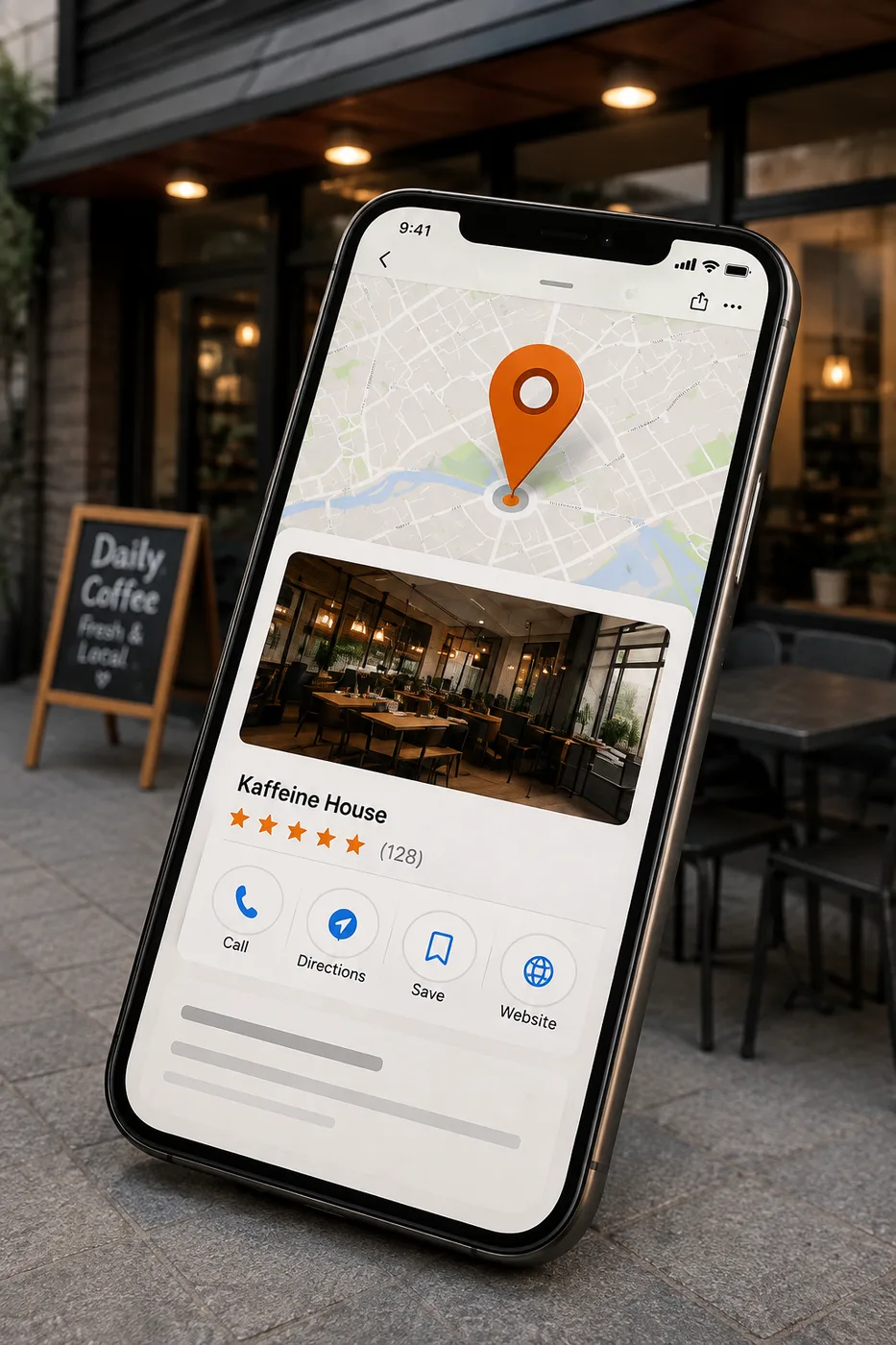
Ask most SME owners how they feel about Google reviews and you will hear some version of the same story: a handful of glowing reviews from the early days, one bruising one-star review that still stings, and then months of silence. Meanwhile the business down the road somehow has 200 reviews and a 4.8 rating.
The gap is rarely luck. It is almost always a simple, repeatable process — asking the right person at the right moment, making it effortless to leave a review, and responding to what comes in. None of it requires bending Google's rules, which is important, because the shortcuts can get your entire listing suspended. Here is how to do it properly.
Why reviews matter more than most SMEs realise
Reviews do two jobs at once. They influence Google's local ranking algorithm directly — quantity, quality and recency of reviews all feed into how prominently you appear on Maps. And they influence the human being reading your listing, who is deciding in seconds whether to trust you with their money.
Both effects compound. More reviews improve ranking, which brings more visibility, which brings more customers, some of whom leave more reviews. Businesses that get this cycle going early build a lead that is genuinely hard for latecomers to catch up on.
A steady trickle of reviews looks more trustworthy to both Google and customers than a sudden burst followed by silence — consistency beats volume alone.
When and how to ask for a review
Timing decides most of your success rate. Asking at the wrong moment — a rushed checkout, an unresolved complaint, a generic email three weeks later — gets ignored. Asking right after a good outcome gets results.
Good moments to ask
- Right after a service is completed and the customer expresses satisfaction out loud.
- When a repeat customer comes back for the second or third time.
- After resolving a complaint well — a happy-ending customer is often glad to say so.
- At the point of delivery or collection for physical products.
- Straight after a positive comment on social media or WhatsApp — ask them to say it on Google too.
Bad moments to ask
- Immediately when someone walks in, before any service has happened.
- During a payment dispute or an unresolved issue.
- Via a mass, impersonal blast to your entire customer list with no context.
QR codes and short links: making it a 10-second job
The biggest reason happy customers do not leave reviews is friction — they mean to, then forget, because finding your business on Google and figuring out how to review it takes too many steps.
Removing the friction
- Generate your direct review link from your Google Business Profile (Google calls it a 'short name' or review link) rather than sending people to search for you.
- Turn that link into a QR code and place it at the counter, on receipts, or on a table tent.
- Save the link as a message template on your phone so staff can send it via WhatsApp instantly.
- For online businesses, include the link in the order confirmation or delivery follow-up.
A QR code at the till, next to a small sign saying "Enjoyed your visit? A quick review helps us a lot", consistently outperforms verbal requests alone because it removes the need for the customer to type anything.
Review request templates you can copy
The best requests are short, personal and specific about what you are asking for. Avoid generic corporate language — it reads as insincere and gets ignored.
In person (spoken)
"Glad that worked out for you! If you have a spare minute, a quick Google review really helps other customers find us — I can send you the link right now on WhatsApp."
WhatsApp follow-up
"Hi [Name], thanks again for coming by today! If you were happy with the service, we'd really appreciate a quick review here: [link]. Takes less than a minute and means a lot to a small team like ours."
Email after delivery
"Hope you're enjoying your [product]! If you have 30 seconds, we'd love to hear your thoughts on Google — it genuinely helps other customers decide, and helps us keep improving: [link]."
Notice none of these mention a discount, a giveaway, or a reward. That is deliberate — and the next section explains why.
Responding to good and bad reviews
Replying to reviews is not optional if you want your profile to look actively managed — both to Google and to prospective customers reading your review section before they buy.
Replying to positive reviews
- Thank them by name and mention something specific from their review — avoid a copy-pasted generic reply.
- Keep it short; two to three sentences is plenty.
- Occasionally mention another product or service, which subtly helps future readers.
Replying to negative reviews
- 1Respond calmly and promptly — within a day or two if possible.
- 2Acknowledge the issue without being defensive, even if you disagree with parts of it.
- 3Take specifics offline: offer a phone number or email to resolve it directly.
- 4Avoid arguing publicly, even if the review feels unfair — future customers judge you on the tone of your reply, not who was 'right'.
- 5If the review breaks Google's policies (fake, off-topic, abusive), flag it for removal, but do not rely on this as your main strategy.
Practical example
A tuition centre received a one-star review complaining about a scheduling mix-up. Their calm, specific reply — acknowledging the error and describing the fix — was later quoted by a prospective parent as the reason they booked a trial lesson. A well-handled bad review can build more trust than a string of generic five-star ones.
What breaks Google's rules (and risks your listing)
Google is explicit about what counts as review manipulation, and enforcement has got stricter, not looser. Getting caught can mean removed reviews, a lowered rating, or full suspension of your listing.
| Practice | Why it is against the rules |
|---|---|
| Offering discounts or freebies for reviews | Incentivised reviews are explicitly banned, positive or negative |
| Review gating (asking only happy customers) | Creates an artificially inflated, unrepresentative rating |
| Writing or buying fake reviews | Directly against Google's policies and easy for algorithms to detect |
| Asking staff or family to review the business | Counts as a conflict of interest, even if the review is genuine |
| Setting up a review kiosk that filters unhappy customers away | A form of review gating, even if unintentional |
The safest and most sustainable approach is simply to ask everyone, consistently, without conditions — and let the ratio of good to bad reviews reflect reality. A slightly lower average rating built honestly is worth more than an inflated one that risks being wiped out overnight.
A monthly review routine that keeps momentum going
Once a month
- Check total review count and rating trend versus last month.
- Read every new review and make sure all have a reply.
- Identify your best recent customer interactions and follow up for reviews if not already asked.
- Refresh your QR code or link display if it looks worn or outdated.
- Share a great review on social media or WhatsApp Status (with permission) to keep the momentum visible.
- Note any recurring complaints in reviews and feed them back into how the business runs.
Fifteen minutes a month, done consistently, will do more for your Google visibility than almost any paid advertising campaign a small business can afford.
Frequently asked questions
Can I offer a discount for leaving a review?
Is it okay to only ask happy customers for reviews?
How many reviews do I need to rank well?
Can I get a fake or unfair review removed?
Should I respond to every single review, even short ones?
Let Ginger Fox build your Google reviews the right way.
We will set up your review system, write templates that sound like you, and keep your profile actively managed so the reviews keep coming in ethically and consistently.
Book a call